



Platinum rarely receives the same spotlight as gold, yet in global markets it often behaves with greater complexity and deeper economic significance. FintechZoom.com Platinum tracks these movements closely, offering a perspective that blends real time data with broader economic context. While precious metals are generally associated with safe haven behavior, platinum’s story is different. It moves on industrial cycles, supply constraints, technological shifts, and investment sentiment all at once. This makes it one of the most informative metals to study when evaluating the condition of manufacturing and the future of clean energy technologies.
In recent years, shifts in automotive production, changes in mining output, and new applications in hydrogen-related industries have pulled platinum into a new phase of importance. With global supply heavily concentrated in a few regions and demand increasingly global, platinum has become a metal where every data point matters. FintechZoom.com Platinum helps audiences interpret these signals with clarity and depth.
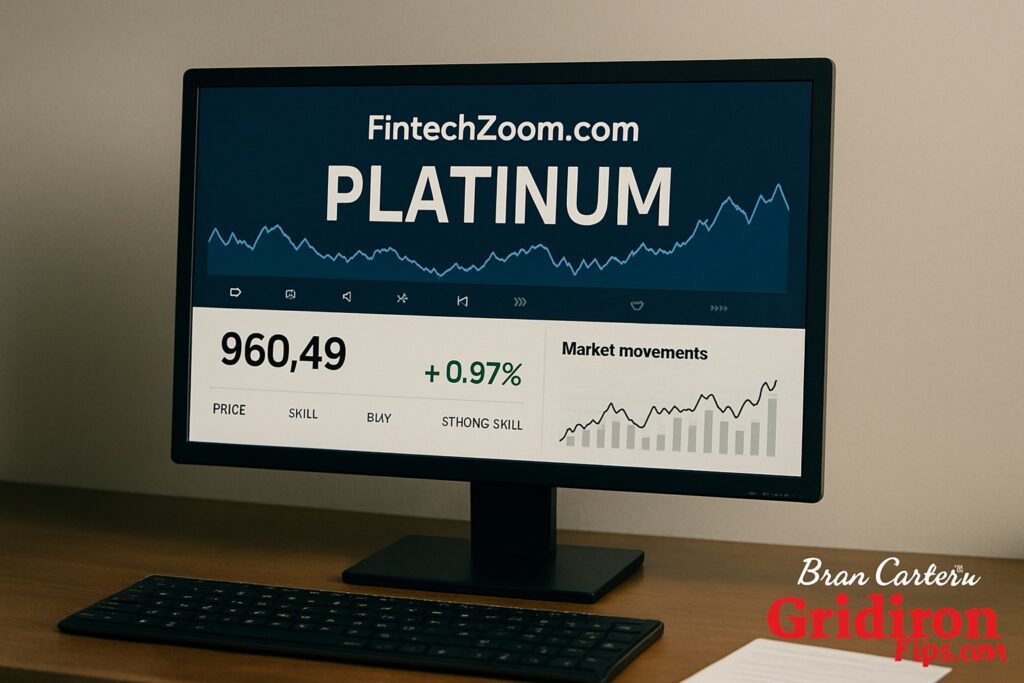
Live Market View: Platinum Price Chart
Understanding Platinum’s Unique Position in the Commodities Market
Unlike gold, platinum is not driven primarily by safe haven buying. Its pricing depends on how industries are performing, how much new technology is being adopted, and whether manufacturers are expanding or slowing down. This gives platinum a dual personality. In periods of global economic growth, platinum can outperform many metals. But during slowdowns, especially when factories cut output, platinum prices can soften quickly.
FintechZoom.com Platinum focuses on this dual nature. Its coverage combines real time price behavior with what is happening across automotive production, energy transformation, and mining performance. Instead of viewing platinum as a traditional precious metal, the platform treats it as an economic indicator with direct ties to real-world activity.
Platinum’s limited mining sources also add to its importance. It is mined primarily in South Africa, Russia, and Zimbabwe, making global supply vulnerable to disruptions. Any shortfall in these regions ripples instantly through global pricing.
Where Supply Comes From and Why It Matters
Platinum’s supply chain is narrow. Very few countries produce it at scale, which creates a vulnerability not seen in other metals. When a major mine in South Africa experiences a shutdown or power shortage, the effect on global markets is visible within hours. Because of this, investors and analysts closely monitor mining output and operational stability.
South Africa’s role
More than half of the world’s platinum comes from South Africa. Local conditions such as electricity shortages, labor disputes, and rising production costs often create uncertainty. Even when output is steady, the threat of disruption can keep prices elevated.
Russia’s contribution
Russia remains a key producer. Although not the largest, it plays a critical role in the supply balance. Any geopolitical tension, trade restriction, or mining constraint in the region makes investors more cautious.
Limited alternative sources
With so many industries relying on platinum and so few countries producing it, the market reacts strongly to supply news. FintechZoom.com Platinum covers these developments in detail, explaining how each shift affects both short term and long term pricing.
Many investors compare platinum with other precious metals to understand broader commodity sentiment. Our detailed FintechZoom.com gold price analysis highlights how gold reacts under market pressure differently compared to platinum.
Industries That Depend on Platinum
The value of platinum is tied closely to the industries that rely on it. These sectors form the backbone of platinum demand, and their performance influences price direction.
Automotive manufacturing
Catalytic converters remain one of the largest drivers of platinum consumption. Although palladium has replaced platinum in many gasoline engines, platinum still plays a major role in diesel engines and hybrid technologies. When global vehicle production increases, platinum tends to show upward movement.
Hydrogen and fuel cell technology
A growing portion of future demand may come from fuel cell systems used in hydrogen-powered vehicles and energy infrastructure. Platinum is essential for these systems, and countries investing in hydrogen development have increased research demand. FintechZoom.com Platinum tracks news from Europe, Asia, and North America related to hydrogen expansion, providing hints about an upcoming demand wave.
High-precision industrial uses
From chemical production to refining, platinum is required for complex industrial processes. These industries do not often make headlines, but their steady, consistent usage forms a stable foundation for platinum’s long-term value.
Jewelry and luxury segment
While not the main driver, jewelry demand in countries like China and India can create seasonal shifts in price. The premium nature of platinum makes it attractive for high-end designs.
Factors That Influence Platinum Price Behaviour
Platinum prices move when broader macroeconomic conditions change. FintechZoom.com Platinum emphasizes how each factor contributes to daily or monthly price direction.
Interest rate cycles
High interest rates generally reduce investor appetite for metals, while low interest rates increase demand. Platinum is no exception, though industrial demand helps balance these swings.
Inflation environment
During periods of rising inflation, investors look for assets that preserve value. Platinum can benefit from this behavior, particularly when industrial demand remains stable.
Currency fluctuations
Because platinum is priced in US dollars, any shift in dollar strength immediately influences price direction. A strong dollar usually depresses platinum prices, while a weaker dollar can lift them.
Manufacturing performance
Global purchasing managers’ index (PMI) reports serve as a leading indicator for platinum demand. Strong manufacturing data often precedes price increases.
Key Market Drivers for Platinum
| Driver | Effect on Market | Reason |
|---|---|---|
| Mining output | Tight supply increases prices | Limited production regions |
| Automotive demand | Higher output lifts demand | Catalytic converters rely on platinum |
| Hydrogen technology | Expanding long term demand | Essential for fuel cells |
| Global inflation | Supports investment demand | Acts as a store of value |
| Dollar movement | Strong dollar weakens price | International pricing mechanism |
| Manufacturing data | Strong PMI supports price | Industrial metal behaviour |
Investment Perspective: How Traders Interpret Platinum Movement
Many investors treat platinum as an asset with long-term undervaluation potential. Its industrial relevance, limited supply channels, and future role in clean energy technologies make it a metal worth following closely. FintechZoom.com Platinum helps investors evaluate whether current market conditions offer opportunity or require caution.
Instead of focusing solely on price, the platform offers deeper insight into market sentiment, technical trends, and upcoming shifts in supply or demand. For traders looking at short-term opportunities, platinum’s volatility offers frequent entry points. For long-term investors, the metal’s alignment with hydrogen development and advanced manufacturing keeps its outlook strong.
Investors tracking industrial metals also study nickel market patterns. Our FintechZoom.com nickel update explains how nickel and platinum often move together in manufacturing-driven cycles.
Conclusion
FintechZoom.com Platinum delivers a clear and structured understanding of platinum’s behavior in global markets. By examining supply concentration, industrial demand, macroeconomic developments, and technological advancements, the platform provides a complete picture of what drives price movement. Platinum’s future is closely tied to energy transition and industrial innovation, and staying informed through accurate and timely insights plays a vital role in navigating this market.