


The topic referenced by https://infomania.space/neoqledtelevisorminiled/363/2022 is connected to the evolution of Neo QLED display technology and its use of Mini LED backlighting. The subject sits at the intersection of panel engineering, light control architecture, and recent changes in high-resolution television manufacturing. From an industry perspective, Neo QLED reflects a structural response to limitations found in earlier LCD implementations.
Mini LED Integration Within Neo QLED Panels
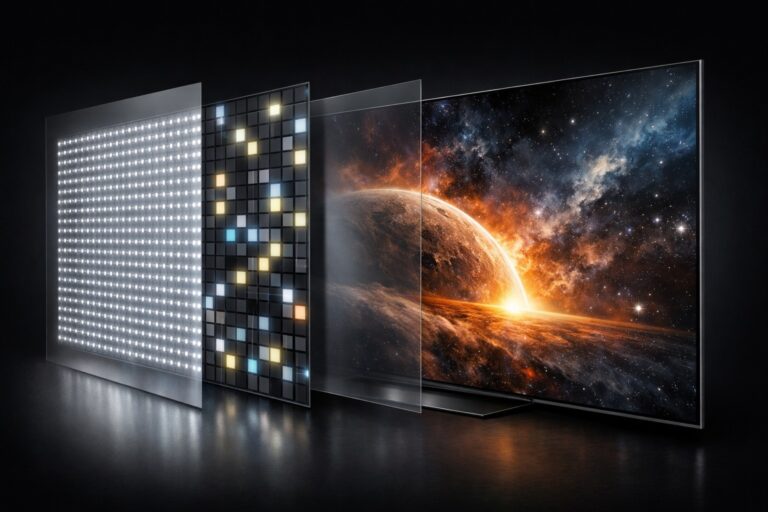
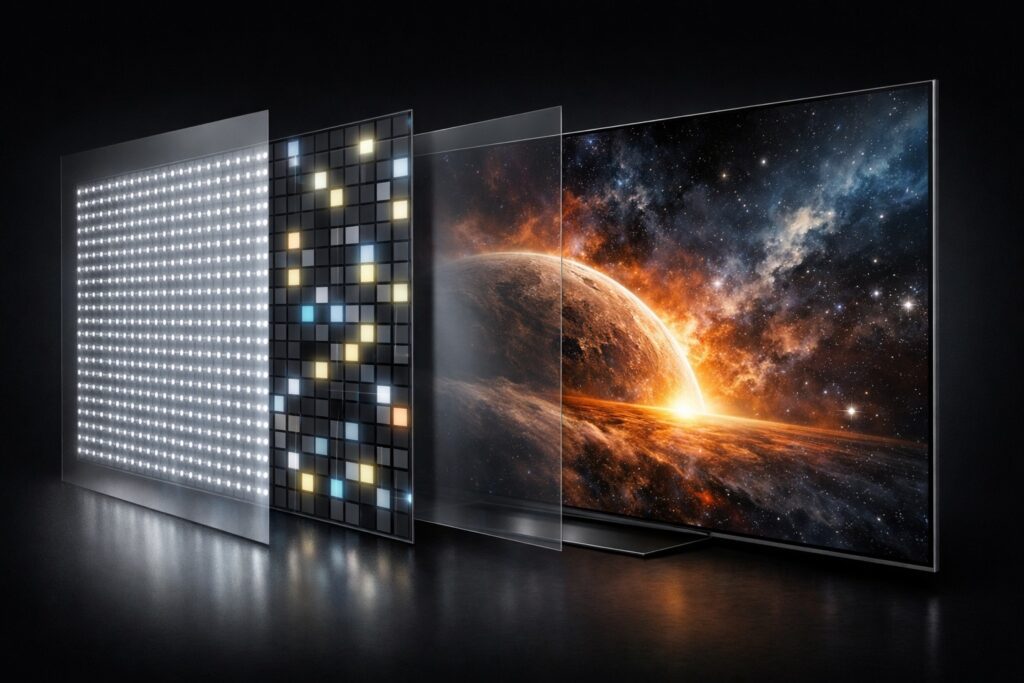
Neo QLED technology is built around the use of Mini LEDs, which are significantly smaller than conventional LED backlights. Their reduced size allows a higher density of light sources behind the panel, changing how brightness and contrast are managed at a hardware level. Modern digital platforms show how underlying advanced display technologies are shaping content delivery and visual experiences. This shift alters the internal structure of LCD displays rather than redefining the display category itself.
The increase in backlight zones directly affects how light is distributed across the screen. Instead of relying on broader illumination areas, Neo QLED panels operate with more localized light control. This structural change reduces light spill between adjacent areas of the display and improves precision in luminance handling.
Local Dimming Architecture and Light Control
A key analytical aspect of Neo QLED lies in its local dimming framework. The Mini LED array enables a more granular dimming structure compared to traditional full-array LED systems. Each zone operates with tighter boundaries, which changes how dark and bright regions coexist on the same screen.
This architecture matters because it addresses a long-standing limitation in LCD technology related to contrast consistency. By refining how backlight zones interact with image data, Neo QLED panels reduce unintended brightness overlap. The result is a more controlled visual output without changing the fundamental LCD panel type.
Processing Layers and Signal Interpretation
Beyond hardware, Neo QLED relies heavily on advanced processing layers that interpret incoming signals and coordinate them with the Mini LED backlight system. Image processors analyze scene data in real time to determine how each dimming zone should respond. Innovations in digital panel architecture illustrate the impact of structured hardware design on image quality and display performance. This coordination between software and hardware defines much of the technology’s functional identity.
The processing layer does not operate independently of the panel structure. Instead, it is designed around the physical constraints and capabilities of Mini LED arrays. This interdependence explains why Neo QLED is often discussed as a system-level evolution rather than a single component upgrade.
The subject described by https://infomania.space/neoqledtelevisorminiled/363/2022 relates to Neo QLED display technology and its use of Mini LED backlighting to improve light control within LCD panels. The focus is on structural changes in backlight density, dimming precision, and processing coordination rather than on consumer-facing features.
Industry Context and Manufacturing Trends
Neo QLED emerged during a period when manufacturers were seeking incremental but measurable improvements to LCD technology. Instead of abandoning existing production lines, Mini LED integration allowed companies to enhance performance while maintaining scalable manufacturing processes. This made Neo QLED a practical response to both technical and economic constraints.
From an industry standpoint, the technology represents a transitional phase. It sits between conventional LED-LCD designs and more fundamentally different display approaches. This positioning explains why Neo QLED is often analyzed in terms of engineering trade-offs rather than as a disruptive shift.
Structural Significance of Neo QLED
The broader significance of Neo QLED lies in how it redefines backlight architecture without redefining the display category. By increasing control at the light source level, the technology reshapes performance boundaries that were previously considered fixed for LCD panels. This structural refinement is the central analytical value of Neo QLED.
In this context, https://infomania.space/neoqledtelevisorminiled/363/2022 functions as a reference point for understanding how Mini LED implementation has altered the internal logic of modern Neo QLED displays. The topic is best understood as an example of how incremental engineering changes can produce system-wide effects.