



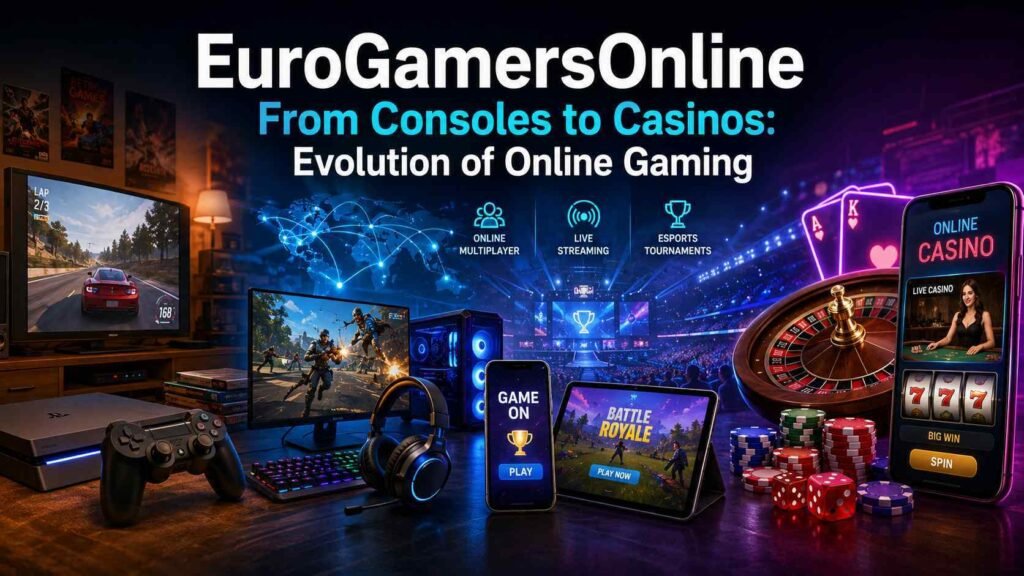
Gaming has moved far beyond the traditional console. What started with physical games and living-room consoles now includes online multiplayer, mobile gaming, esports, streaming, and casino platforms.
EuroGamersOnline From Consoles to Casinos reflects this shift in the way people discover and experience digital entertainment. The journey has been driven by better internet connections, more powerful devices, and changing expectations around convenience and accessibility.
From Consoles to Connected Gaming
Early console gaming was mostly a local experience. Players purchased a game, connected their console to a television, and played alone or with friends nearby.
Internet connectivity changed that experience. Modern consoles can connect players across countries, deliver digital games, provide regular updates, and support large multiplayer communities.
Instead of gaming being tied to a physical copy or location, players became part of an online ecosystem.
How the Internet Changed Gaming
Online multiplayer was one of the most important developments in gaming.
Players could compete or cooperate with people around the world, while digital stores made games available without physical discs. Updates and downloadable content also allowed developers to continue improving games after release.
Gaming communities grew alongside these changes. Forums, livestreams, video platforms, and social networks gave players new ways to discuss games, share strategies, and discover new releases.
The Growth of Mobile Gaming
Smartphones brought gaming to an even larger audience.
Players no longer needed dedicated hardware for many types of games. Mobile devices offered instant access to casual titles, multiplayer games, and increasingly sophisticated experiences.
The popularity of mobile gaming also changed user expectations. Fast downloads, simple account management, digital payments, and access across different locations became normal parts of online entertainment.
From Gaming Platforms to Online Casinos
Online casinos developed as internet access became more widespread. Unlike traditional casinos, online platforms allow users to access casino games through computers and mobile devices.
Depending on the operator and local regulations, these games can include slots, roulette, blackjack, poker, and live-dealer formats.
Modern platforms use streaming, graphics, and mobile-friendly interfaces to create interactive experiences. However, casino gaming differs fundamentally from conventional video games because it can involve real-money wagering and outcomes based largely on chance.
What They Have in Common
Video games and online casinos are different forms of entertainment, but their digital experiences can share some features.
Accessibility: Both can be accessed through internet-connected devices.
Interactive experiences: Users actively participate rather than simply consuming content.
Mobile access: Smartphones have become an important platform for both gaming and online entertainment.
Digital communities: Multiplayer games, live features, tournaments, and social tools can encourage interaction between users.
These similarities help explain why different forms of digital entertainment increasingly exist within the same online environment.
Technology Behind Modern Gaming
Several technologies have accelerated the development of online gaming.
High-speed internet supports real-time multiplayer and live streaming. Cloud infrastructure allows services to handle large numbers of users, while modern hardware delivers better graphics and performance.
Artificial intelligence is also becoming more common. Game developers use AI for areas such as non-player characters, matchmaking, and personalization. Online platforms can use automated systems for functions such as security and fraud detection.
Meanwhile, virtual and augmented reality are creating new possibilities for immersive experiences.
The Importance of Gaming Communities
Gaming is now closely connected with online communities.
Players can follow esports competitions, watch livestreams, share gameplay videos, and communicate with other fans. This has created opportunities not only for players but also for streamers, content creators, professional competitors, and gaming businesses.
Live-dealer casino games have introduced a different type of social interaction to online gambling. Even so, players should distinguish between social features and the financial risks associated with wagering.
Responsible Casino Gaming
Online casino access comes with responsibilities that do not apply in exactly the same way to traditional video games.
Casino games should be treated as entertainment rather than a guaranteed source of income. Players can lose money, and no strategy can eliminate the uncertainty of chance-based games.
Anyone choosing to gamble should set a budget, understand the rules, and avoid using money needed for essential expenses. Depending on the jurisdiction and operator, tools such as deposit limits, time limits, cooling-off periods, and self-exclusion may also be available.
It is equally important to check whether an online casino is legally licensed to operate in the player’s location.
Choosing an Online Platform
Not every platform offers the same experience, so users should do some basic checks before signing up.
For gaming services, factors such as performance, compatibility, pricing, and security can matter.
For online casinos, licensing, payment methods, withdrawal terms, privacy protections, and responsible-gaming options deserve particular attention.
Reading the terms and conditions before depositing money can help users understand exactly what they are agreeing to.
What Comes Next?
The gaming industry is likely to become even more connected.
Cloud gaming may make high-quality titles accessible across a wider range of devices. AI could contribute to more responsive game worlds and personalized experiences, while virtual and augmented reality may offer new ways to interact with digital environments.
Mobile gaming will remain important, while consoles and PCs will continue to serve players looking for high-performance experiences.
Online casinos are also likely to adopt new technologies, particularly in areas such as live streaming, mobile interfaces, and digital payments. Regulation and player protection will remain important as these services develop.
The Changing Face of Digital Entertainment
The move from consoles to online platforms is more than a change in hardware. It represents a shift in how people access, experience, and share entertainment.
A player can move from a console game to a mobile title, watch an esports event, join an online community, or explore casino gaming all through connected digital devices.
EuroGamersOnline From Consoles to Casinos captures this broader journey. Gaming has expanded into a diverse digital environment where technology gives players more choice and flexibility than ever before.
The important part is understanding what each type of entertainment offers and, where real money is involved, making responsible and informed decisions.
Frequently Asked Questions
What does EuroGamersOnline From Consoles to Casinos refer to?
It describes the evolution of gaming from traditional console experiences toward connected digital entertainment, including online, mobile, and casino platforms.
How did the internet change console gaming?
The internet introduced online multiplayer, digital game distribution, downloadable content, and communities that connect players around the world.
Why did mobile gaming become so popular?
Mobile games are easy to access because smartphones are widely available and do not require dedicated gaming hardware for most titles.
Are online casinos the same as video games?
No. Although both are digital experiences, casino games can involve real-money wagers and chance-based outcomes, while conventional video games generally focus on gameplay, competition, storytelling, or progression.
How can people gamble responsibly online?
Players should set spending limits, understand the risks, use responsible-gaming tools where available, and check the licensing and regulations applicable to their location.
Final Thoughts
Gaming has evolved from a primarily offline console experience into a broad digital industry.
Online multiplayer, mobile devices, streaming, esports, and casino platforms have each contributed to this transformation. As technology continues to develop, players will have even more ways to access digital entertainment.
The key is to enjoy those experiences with a clear understanding of how they work—especially when an activity involves real-money gambling.